BF–Based Traditional Systems
Irena Bojanova, Inventor/Creator, PI & Lead, NIST Bugs Framework (BF), 2014 – ~~~
Irena Bojanova, Inventor/Creator, PI & Lead, NIST Bugs Framework (BF), 2014 – ~~~A traditional BF-based vulnerability system identifies a vulnerability in code (e.g., via static and dynamic analysis, or simulation/emulation) and specifies it as a chain of BF Weaknesses (see Figure 1).
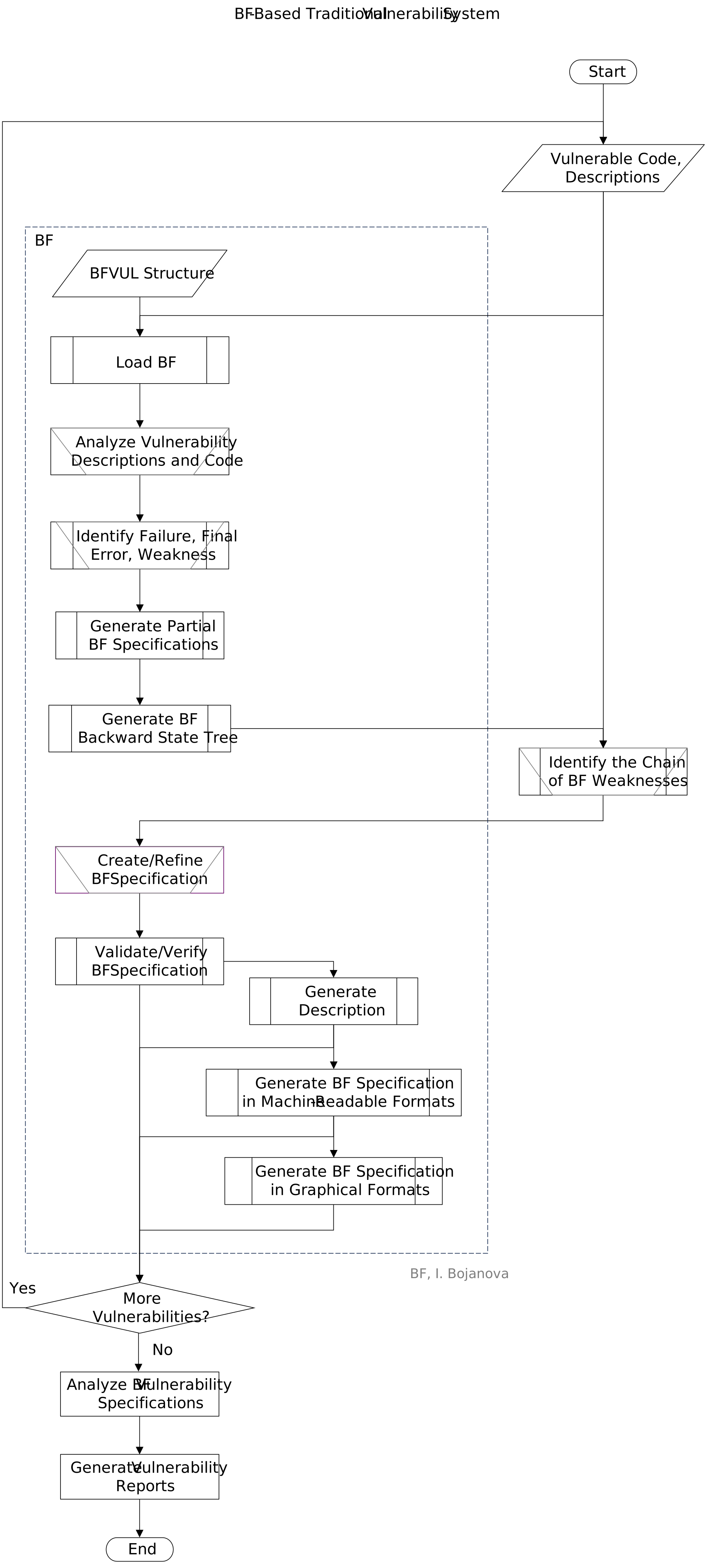
Figure 1. BF-Based Traditional Vulnerability System.
The steps from the dashed rectangle are BF specific.
- Identify a real-world vulnerability described in vulnerability reports and repositories (e.g., CVE, NVD, CWE, etc.) that has also disclosed code with fix (GitHub, etc.).
- Utilize the BF Vulnerability structure via the BFVUL APIs.
- Load the BF Taxonomy, Operation Flow Graphs, Valid Relations and Valid Transitions matrices via the BF Taxonomy, and BF Formal Language (BFFL) APIs.
- Analyze Vulnerability Descriptions and Code.
- Identify BF Failure and BF Final Error or BF Weakness (at Sink, Source, etc.).
- Generate Partial BFCVE specifications via the BFCVEPre BFCVEs Partial API.
- Generate BF Backward State Tree via the BFCVEPre BFBackward API.
- Identify the underlying BF Weaknesses chain via static/dynamic analysis or simulation/emulation.
- Create/Refine BF Specification via the BF Tool.
- Validate/Verify BF Specification via the BFFLL BF Parser API.
- Generate BF Specification in Machine-Readable Formats via the BFVUL BFVULs, Files, and Types APIs.
- Generate BF Specification in Graphical Formats via the BFVUL Graphs API.
- Generate BF Description of the BF Vulnerability specification via the BFVUL BF Description API.